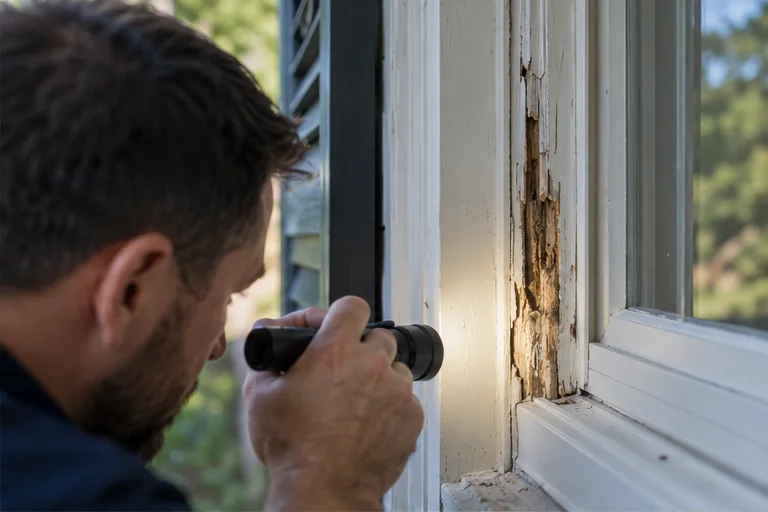
Termite inspection & treatment options across East Tennessee
Ready to compare local pest treatment options? Request a free in-home inspection, discuss pest removal and prevention, and get treatment pricing from Tennessee Pest Protection before committing to service.
Request an inspection →Signs of termites
- Winged swarmers or piles of discarded wings near windows and doors in spring
- Pencil-width mud tubes on the foundation, piers or crawl space walls
- Wood that sounds hollow or crumbles when pressed
- Bubbling or uneven paint on walls or trim
- Doors and windows that suddenly stick
Why it matters in East Tennessee
The Eastern subterranean termite is the most common termite in Tennessee. These colonies live in the soil and travel into homes through mud tubes, feeding on wood from the inside where damage is hard to see. Crawl spaces, wood-to-soil contact and moisture around the foundation all raise the risk.
Swarms are most often seen on warm days in spring, frequently after rain, but termites feed year-round below ground.
How it works
- Answer a few questions
Tell us what you're seeing and where. It takes about a minute. - We call to confirm and schedule
Request a preferred window; wait for confirmation before planning a visit. - Discuss the proposed inspection
Tennessee Pest Protection inspects inside and out, explains what they find, and recommends a treatment and ongoing protection plan with pricing. - You decide
The inspection is free with no obligation. For termites, the first visit is an inspection and evaluation, and any treatment is scheduled as a separate visit.
Termite Inspection by city
What happens during a termite inspection in East Tennessee
The most common termite in Tennessee is the eastern subterranean termite. It lives in the soil and travels into homes through mud tubes, so an inspection focuses on the places where soil, moisture and wood meet: the foundation, crawl space, basement, porches, garages and areas around plumbing.
What the inspector usually checks
- Mud tubes on foundation walls, piers and sill plates
- Damaged, hollow-sounding or blistered wood
- Discarded wings near windows and doors, often left after a spring swarm
- Moisture problems such as leaks, poor drainage or a damp crawl space
- Wood-to-soil contact, mulch piled against the siding, and stored firewood
How to prepare
Clear a path to the crawl space entrance, the attic hatch and any areas under sinks and around the water heater. Let the inspector know about any past termite treatments, warranties or damage repairs.
Buying or selling a home
Many home sales and mortgages require a wood-destroying insect inspection report. Pest control in Tennessee is regulated by the Tennessee Department of Agriculture, so ask the company for its charter or license details if you need a report for a closing.
If termites are found
Treatment options usually include a liquid soil treatment around the foundation or a baiting system. Ask how each works, how long it lasts, and what any ongoing service or warranty covers before deciding.
Termite inspection FAQ
How do I tell flying ants from termite swarmers?
Termite swarmers have straight antennae, a thick waist and two pairs of wings of equal length. Flying ants have elbowed antennae, a pinched waist and front wings longer than the back. If you're not sure, the technician can identify them during the inspection.
Is termite treatment done on the first visit?
Termite appointments usually start with an inspection and evaluation. If treatment is needed, it's typically scheduled as a separate visit so the right approach can be planned for your home.
How long does a termite inspection take?
For a typical single-family home, an inspection often takes about an hour, depending on the size of the house, the crawl space or basement, and how easy it is to reach areas such as the attic, garage and plumbing access points.
How often should I have my home inspected for termites?
Many pest professionals recommend a termite inspection about once a year in Tennessee, and sooner if you see swarmers, mud tubes or damaged wood. Homes with crawl spaces, moisture problems or wood touching the soil carry more risk.
When do termites swarm in East Tennessee?
Eastern subterranean termites usually swarm on warm spring days, often after rain. Swarmers or piles of discarded wings near windows and doors are a common reason to request an inspection, but termites keep feeding below ground year-round.
Do I need a termite letter to buy or sell a home in Tennessee?
Many home sales and some mortgage loans require a wood-destroying insect inspection report, often called a termite letter. Ask your agent or lender which form they need and confirm the pest company can provide it before the closing date.
What should I do if I find mud tubes on my foundation?
Leave them in place so the inspector can see them, take a photo, and request an inspection. Avoid spraying store-bought insecticide on the tubes, because it can make the activity harder to find and treat properly.
Termite guides: Signs of termites in your home · Flying ants or termites? · Termite inspection in Knoxville, TN